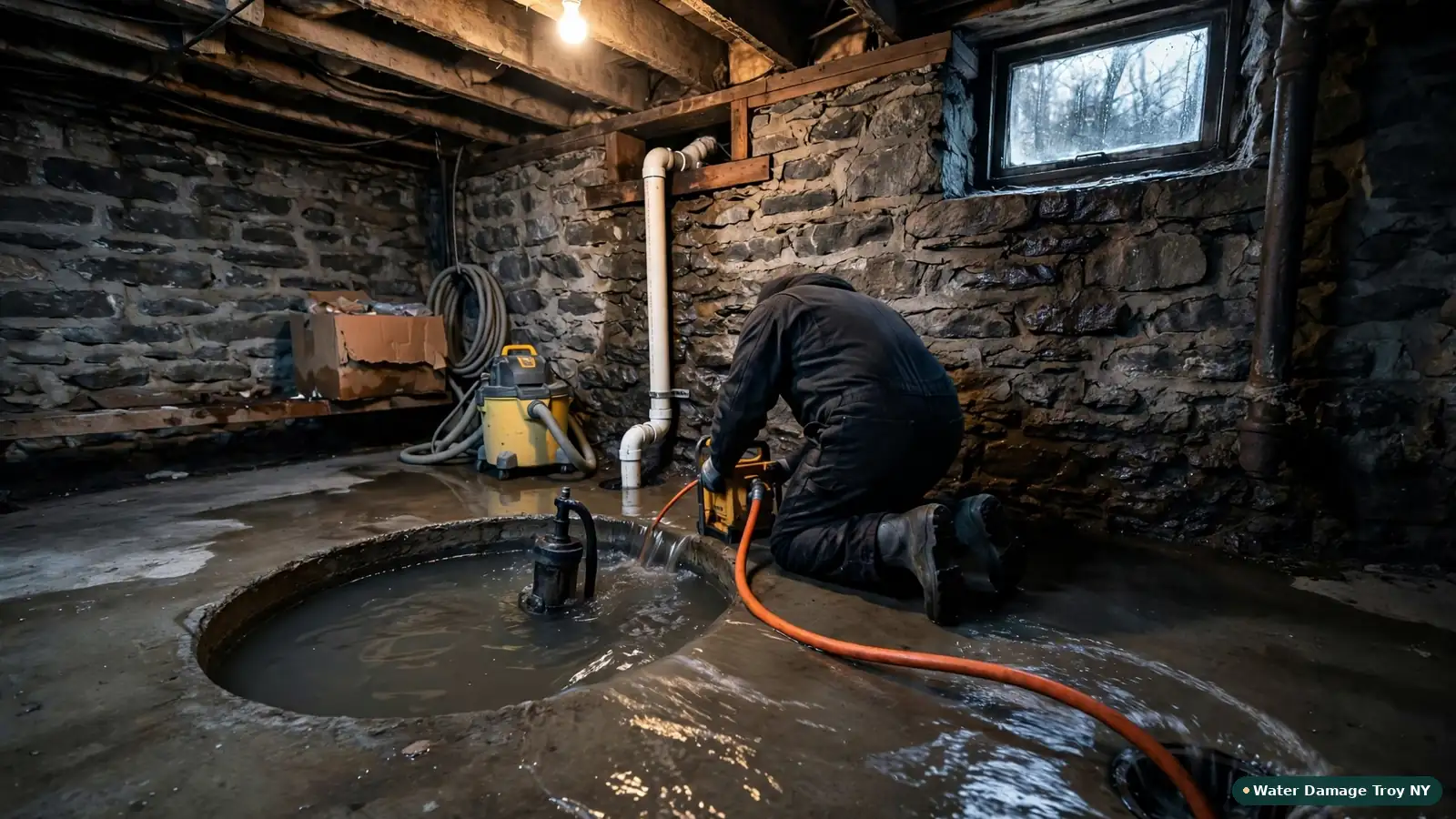
Sump Pump Failure Cleanup in Troy, NY
Sump pump failure cleanup in Troy, NY gets water out of your basement fast when the pump quits during a storm, a power outage or the spring thaw. We extract, dry the floor and walls, protect your belongings and help you understand what failed. water damage restoration in Troy
What Should I Do When My Sump Pump Fails in Troy?
Quick answer: do not walk into water if outlets, cords or appliances may be in it; shut off basement power at the panel only if you can reach it from a dry spot. Check whether the pump lost power, the float is stuck or the discharge line is frozen. Move belongings up, take photos, and call a water damage crew to extract the water and dry the basement before mold starts.
Our Sump Pump Flood Cleanup Process in Troy
Stage 1: Make it safe. Power to the basement is checked before anyone walks into the water.
Stage 2: Extract. Truck-mounted or portable pumps remove standing water fast.
Stage 3: Sort belongings. Items are moved out, and anything ruined is photographed for your claim. contents pack-out
Stage 4: Remove wet materials: carpet pad, insulation and drywall below the water line.
Stage 5: Dry and dehumidify the basement, walls and framing until readings are normal. structural drying
Stage 6: Clean and treat surfaces so mold does not take hold. mold remediation
Why Sump Pumps Fail in Troy Homes
- Power outages during storms, when the pump is needed most
- A stuck or tangled float switch
- A worn-out motor on an older pump
- A discharge line frozen solid in winter
- A pump too small for the amount of water coming in
- A failed check valve letting water flow back into the pit
- Silt and debris clogging the intake
Spring Thaw, River Levels and Troy Basements
Troy's worst sump pump months are March and April. Snow melts, the ground is still partly frozen so water cannot soak in, and spring rain piles on. The Hudson, the Poesten Kill and the Wynants Kill rise, and groundwater rises with them. Homes in South Troy near the river and low spots in Lansingburgh feel it first.
Older Troy basements with fieldstone or rubble walls let water seep in at many points, so the sump pump does a lot of work. If it fails, or the power goes out during a storm, water can cover the floor in hours. We extract it, dry the basement and walls, and point out what made the pump fail. flooded basement cleanup in Troy
How to Keep Your Troy Sump Pump Working
- Test the pump every few months and before spring thaw.
- Add a battery or water-powered backup pump and a high-water alarm.
- Keep the pit clear of silt, gravel and debris.
- Make sure the discharge line runs well away from the foundation and cannot freeze shut in winter.
- Check the check valve so water does not flow back into the pit.
- Replace an aging pump before it fails, not after.
Sump Pump Backup Options for Troy Basements
Most Troy sump pumps fail during a storm, when the power is most likely to go out. A backup is the best protection, and there are a few options:
- Battery backup pump: kicks in when power fails; the battery needs checking and replacing every few years
- Water-powered backup: uses city water pressure instead of electricity; works only on municipal water
- Portable generator or standby generator: keeps the main pump running during long outages
- Second primary pump: helps when one pump cannot keep up during heavy spring runoff
- High-water alarm or smart sensor: warns you by sound or phone before water reaches the floor
Whichever you choose, test it twice a year, before the spring thaw and before hurricane remnants and fall storms. flooded basement cleanup
More Ways Our Troy Crew Can Help
- Flooded Basement Cleanup
- Flood Damage Restoration
- Sewage Backup Cleanup
- Mold Remediation
- Contents Pack-Out
- Structural Drying
Sump Pump Failure in Troy, NY at a Glance
Short answer: when a sump pump fails, water rises in the pit and floods the basement. Unplug the pump if water is near it, remove standing water, dry the space and fix or replace the pump. Most failures come from power outages, stuck floats and clogged intakes.
- Common causes: power loss in storms, stuck floats, clogged screens and frozen discharge lines.
- Backup options: battery backup or water-powered pumps.
- Test: pour water into the pit every few months.
- Discharge line: keep it clear and away from the foundation.
- Age: many pumps last about seven to ten years.
- Spring risk: snowmelt and heavy rain push pumps hardest.
Water Damage Troy NY dries the basement and helps plan a backup. See our flooded basement cleanup page for drying details.
Where Sump Pump Water Should Go in Troy, and Why Lines Freeze
A sump pump is only as good as the place it sends water. If the discharge line is frozen, blocked or dumping water next to the foundation, the same water comes right back into the basement.
- Send water well away from the house and toward a spot where it can soak in or drain safely.
- Do not connect a sump pump to the sanitary sewer or a floor drain; many cities prohibit it. Check with the City of Troy before changing where it drains.
- Bury or slope the line so water does not sit in it and freeze in January.
- Add a freeze-protection fitting near the house so water can escape if the outside line freezes.
- Keep snow, leaves and ice clear from the outlet.
Water Damage Troy NY often finds frozen or clogged discharge lines as the real reason a basement flooded. flooded basement cleanup
Sizing a Sump Pump for a Troy Basement
A pump that is too small for your basement runs nonstop during heavy rain and still falls behind. A pump that is far too large cycles on and off quickly and wears out early. Sizing matters in Troy basements, where spring snowmelt can send a lot of water into the pit at once.
- Inflow: how fast water fills the pit during heavy rain. Your plumber can time it.
- Lift height: how far the pump must push water up and out of the basement.
- Pipe length and turns: long discharge runs and many elbows reduce flow.
- Pump type: submersible pumps are quieter and common in finished basements; pedestal pumps are easier to service.
- Switch type: vertical floats are less likely to get stuck in small pits.
Water Damage Troy NY can tell you whether the pump simply could not keep up when we dry your basement, so your plumber knows what to change.
Warning Signs Your Troy Sump Pump Is About to Fail
Sump pumps usually give warning signs before they quit. Catching them early in a Troy basement can save you from a flood during the next spring thaw.
- The pump runs constantly, even when it is not raining.
- The pump turns on and off rapidly, a sign of a stuck float or bad check valve.
- Loud grinding, rattling or humming noises.
- Rust, corrosion or a strange smell from the pit.
- Water left in the pit after the pump shuts off.
- The pump is more than seven to ten years old.
If you notice any of these signs, have a plumber look before the next storm. If water is already on the floor, call Water Damage Troy NY.
Older Troy Basements Without a Sump Pit: Your Options
Many older Troy homes, especially in Lansingburgh, South Troy and around Washington Park, were built long before sump pumps were common. If your basement has no pit and still takes on water in spring, there are several paths forward.
- Improve drainage outside first: extend downspouts, regrade soil and clear window wells.
- Add an interior drain and sump pit: a contractor cuts a trench along the inside of the foundation, lays drain pipe and installs a pit and pump.
- Use a floor drain if one exists, but only if it is connected properly and does not back up during storms.
- Seal cracks and gaps where pipes enter through the wall.
- Keep valuables off the floor and run a dehumidifier.
Water Damage Troy NY dries basements without pits as well as those with them, and can show you where water is entering so your plumber or waterproofer knows where to start.
What a Busy Sump Pump Tells You About Your Troy Basement
A sump pump that runs all spring is doing its job, but it is also telling you something about your lot and foundation.
- Constant running after storms can point to a high water table or poor yard drainage.
- Running in dry weather can mean a stuck float or a leak into the pit.
- Short, frequent cycles can mean the pit is too small or the check valve is failing.
- Keeping a simple log of when the pump runs helps a contractor find the cause.
If your pump runs constantly every spring, Water Damage Troy NY can help you document it for your plumber or waterproofing contractor.
Sump Pump Failure FAQs - Troy, NY
Sump pump questions we hear most in Troy.
Do I need a backup sump pump?
A battery backup pump or a water-powered backup keeps running when the power goes out during a storm, which is exactly when you need it. Add a high-water alarm so you know before the basement floods.
How long does a sump pump last?
Most sump pumps last around 7 to 10 years, less if they run often. In South Troy and other low-lying parts of the city, pumps can run constantly in spring, which wears them out sooner. Test yours every few months by pouring water into the pit.
Does insurance cover sump pump failure?
Often only with a specific water backup or sump overflow endorsement on your homeowners policy. Without it, many standard policies exclude it. Check your policy, and if you do not have the endorsement, ask your agent about adding it. water damage insurance claim help
Sump Pump Failed in Troy? Call Now
When the sump pump stops, the basement fills fast, especially during a storm or spring thaw. Call our Troy crew now and we will get the water out and the basement dry.
Spring snowmelt and heavy rain push groundwater up fast in Troy, especially in South Troy near the Hudson and in low lots along the Wynants Kill. Many local basements depend on a single sump pump with no backup. Water Damage Troy NY extracts the water, dries the basement and walls, and tells you whether the pump, the float, the discharge line or a power outage caused it.
Water Damage Troy NY serves Troy, Lansingburgh, South Troy, Sycaway, the Eastside, Brunswick, North Greenbush and nearby Rensselaer County.