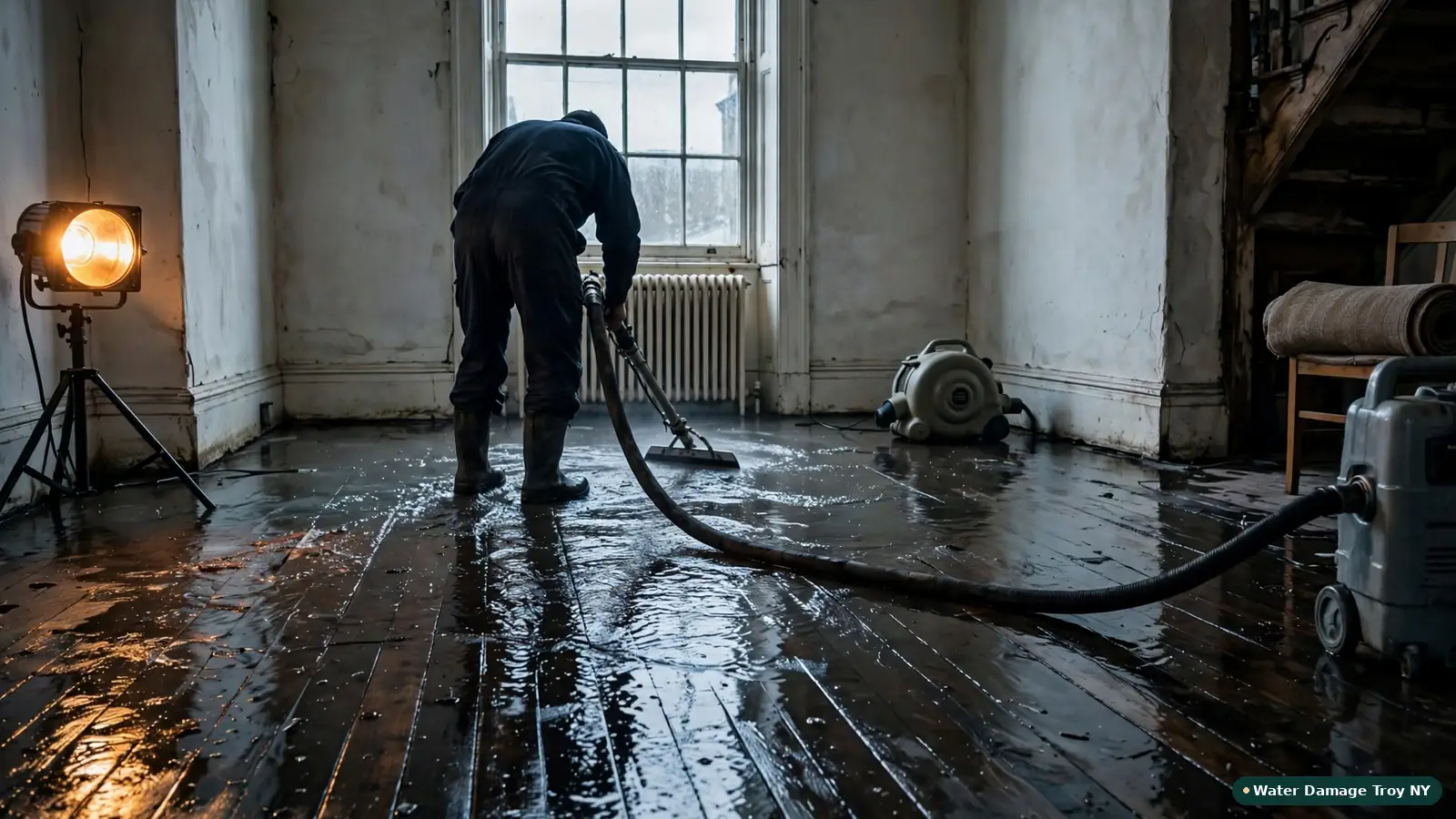
Emergency Water Removal & Extraction in Troy, NY
Emergency water removal in Troy, NY comes down to speed and the right equipment. When water covers a basement floor, soaks a kitchen or pours through a ceiling, our crew arrives with pumps, truck-mounted and portable extractors, pulls out the standing water and starts drying on the very first visit. We answer day and night for homes and businesses across Troy and Rensselaer County.
Why Fast Water Removal Matters in Troy Homes and Buildings
Water damage follows a predictable clock. In the first minutes, water spreads across floors and finds every low spot. Within a few hours, drywall and plaster wick it upward, carpet pad soaks through, and furniture legs start to stain. By the end of the first day, wood floors begin to swell, paint bubbles and doors stick. After 24 to 48 hours, mold can take hold on wet materials, and the musty smell sets in.
Troy buildings add their own twists. In a three-story rowhouse, a leak on the top floor can travel down through two ceilings before anyone sees it. Basements with fieldstone walls and old concrete patches hold water in joints and low corners. And during a Capital Region winter, cold water and cold rooms dry far more slowly, so drying has to be planned, not guessed.
The bottom line: the faster liquid water is extracted, the less has to be dried, cut out and replaced. Extraction is the cheapest, fastest part of any water job, and it pays off for the rest of the project.
What Is Emergency Water Removal and How Is It Done in Troy?
Emergency water removal means pulling liquid water out of a building with pumps and extractors before it soaks deeper, then setting up dehumidifiers and air movers to dry what is left. In Troy, an experienced crew removes standing water on the first visit, maps hidden moisture with meters and thermal imaging, and checks drying progress every day until materials are dry.
Our Emergency Water Removal Process in Troy, NY
Stage 1: Safety first. We check for live electrical hazards, gas smells and sagging ceilings before anyone steps into the water.
Stage 2: Stop the source. We help locate and close the right valve and can coordinate a plumber if the line needs repair.
Stage 3: Bulk water removal. Submersible pumps handle deep basement water quickly, often in the first hour on site.
Stage 4: Detailed extraction. Truck-mounted and portable units pull water from carpet, pad, tile, vinyl and wood.
Stage 5: Find the hidden water. Thermal imaging and moisture meters show where water traveled under floors and into walls and ceilings.
Stage 6: Protect your belongings. Furniture is moved or set on blocks, and valuables are relocated or packed out if needed.
Stage 7: Set up drying. Dehumidifiers and air movers go where the readings say they are needed, and we set clear dry goals for each material.
Stage 8: Monitor daily. We return every day to take readings, adjust equipment and pull it only when everything is truly dry.
Equipment We Bring to Water Emergencies in Troy
- Submersible pumps for deep basement water that a vacuum could never touch
- Truck-mounted extraction for high-volume removal from carpet, pad and hard floors
- Portable extractors for upper floors of rowhouses and apartments where truck hoses cannot reach
- Weighted extraction tools that press water out of carpet and pad
- Low-grain refrigerant (LGR) dehumidifiers that keep pulling moisture even in cool basements
- High-velocity air movers placed to sweep wet surfaces
- Thermal imaging cameras and pin and pinless moisture meters to find wet materials
- Hygrometers to track humidity room by room
- Generators when a storm has knocked out power
- EPA-registered antimicrobial treatments for affected surfaces
Where Water Hides After a Leak in Older Troy Properties
Visible water is only part of the story. In Troy's older buildings, water slips into places most people never think to check:
- Between layers of old kitchen flooring, where linoleum was laid over linoleum over wood
- Behind plaster walls, in the gap between the plaster and the brick or stone
- Inside ceiling cavities between floors, especially in rowhouses and two-families
- Under baseboards, door casings and built-in cabinets
- Inside stair stringers and under treads
- In the joints of fieldstone basement walls and under old concrete patches
- Beneath wall-to-wall carpet laid over original hardwood
That is why every emergency visit includes thermal imaging and moisture meter readings. If we cannot measure it, we cannot dry it, and anything left wet will show up later as stains, odor or mold.
Water Emergencies We Handle Every Week Across Troy
The jobs we see most often around Troy and the rest of Rensselaer County:
- Burst pipes in exterior walls, unheated porches and crawl spaces during January and February cold snaps
- Water heater tanks rusting through in basements, often discovered hours later
- Washing machine hoses and toilet supply lines that split while no one is home
- Upstairs unit leaks in two-family and multi-family houses that soak the ceiling below
- Sump pumps that fail during spring snowmelt or a summer power outage
- Storm runoff on Troy's steep hillside streets that pushes water through basement walls and window wells
- Ice dams that send meltwater through ceilings and down interior walls
- Broken fire sprinkler heads in offices, shops and apartment hallways
- Overflowing tubs and sinks that run through the floor into the room below
While Our Troy Crew Is Driving Over
If it is safe to do so, these steps protect your home in the minutes before we arrive:
- Shut off the water. Use the fixture valve or the main shut-off, usually in the basement where the service line comes through the front wall.
- Kill the power to wet rooms at the breaker panel, but only if you can reach the panel without standing in water.
- Move photos, documents, electronics and small furniture to a dry floor.
- Take quick photos and video of the water and the source for your insurance claim.
- Put foil or plastic under furniture legs so wood stains do not bleed into carpet.
- Open cabinet doors under sinks to let air reach wet areas, and keep pets and kids out.
Common Mistakes That Make Water Damage Worse in Troy Homes
We see the same few mistakes turn small leaks into big jobs. Avoid these and you will save yourself tear-out and stress:
- Waiting until morning. Overnight is often when plaster and subfloor soak up the most water.
- Relying on a shop vacuum alone. It gets surface water but leaves the pad, subfloor and wall cavities wet.
- Running box fans without dehumidifiers. Fans move damp air around; without dehumidification, humidity climbs and mold gets a head start.
- Cranking up the heat. In a Troy winter it is tempting, but warm, wet air speeds up microbial growth.
- Leaving wet rugs on hardwood. Area rugs trap moisture against the wood and cause dark stains and cupping.
- Painting over a ceiling stain. If the material is still wet behind the paint, the stain and the smell come back.
Emergency Water Removal for Troy Businesses and Rental Buildings
A flooded storefront on River Street or a leak in a Hoosick Street office is not just a cleanup job. It is lost sales, unhappy tenants and a schedule that falls apart. For commercial and rental properties, our crew sets up containment so unaffected areas stay open, runs quiet drying equipment where people are working and plans the loudest work for after hours.
In multi-family buildings, one leak often touches two or three units. We document each unit on its own, keep tenants informed in plain language and send the owner or property manager a daily summary with photos and moisture readings. That keeps everyone on the same page and makes the insurance side much simpler.
What Affects Emergency Water Removal Time in Troy
Most Troy emergency calls are extracted on the first visit, but a few things change how long the crew is on site and how much equipment stays behind:
- How much water and how far it spread: one room, a whole floor, or the floor below as well
- The water category: clean supply water moves fast, while sewage or Hudson River floodwater adds cleaning and removal steps
- What it soaked into: carpet and pad, plaster, fieldstone, hardwood or drywall
- How long it sat before the call, since every hour pushes water deeper
- Access: tight basement stairs in rowhouses, shared walls and upstairs units
- The season: January cold and July humidity both change the drying setup
Whatever the size of the job, the first visit always ends with the water out, the source stopped, drying equipment running and a written plan you can share with your adjuster. structural drying in Troy
Related Water Damage Services in Troy
Water removal is the first step, not the whole job. Depending on what we find, these services usually follow:
- Flooded Basement Cleanup in Troy - for below-grade water, stone walls and floor drains
- Burst & Frozen Pipe Water Damage - for winter pipe breaks inside walls and ceilings
- Structural Drying & Dehumidification - measured drying of walls, floors and framing
- Sewage Backup Cleanup - when the water came from a drain or sewer line
- Mold Remediation - if water sat long enough for growth to start
- Water Damage Repair & Rebuild - drywall, plaster, flooring and paint once everything is dry
Emergency Water Removal in Troy, NY at a Glance
Short answer: emergency water removal means pulling standing water out with pumps and extractors within hours, before it wicks into walls and subfloors. In Troy, a crew can usually start the same day, and extraction alone often takes a few hours for a single floor or basement.
- When to call: standing water, water coming through a ceiling, or any water near outlets or a furnace.
- What we bring: submersible pumps, truck-mount and portable extractors, weighted carpet tools and thermal cameras.
- Clean vs. dirty water: clean supply-line water is handled very differently from sewage or Hudson River floodwater.
- Night and holiday calls: answered by a person, any hour.
- What you can do now: shut the main valve, cut power to wet rooms if it is safe, and move valuables up.
- What comes next: drying, cleaning and repair, with daily moisture readings.
Water Damage Troy NY treats extraction as step one, never the whole job. See how drying finishes it on our structural drying page.
Emergency Water Removal FAQs for Troy, NY
Straight answers to the questions we hear most on emergency calls around Troy.
Do you remove water at night and on weekends in Troy?
Yes. Our phone line and crews run 24 hours a day, seven days a week, including holidays and the middle of a January cold snap. Water emergencies rarely happen at a convenient time, so neither do we.
How much water is too much for a shop vacuum?
A wet/dry vacuum is fine for a small spill on a hard floor. Once water covers more than one room, soaks carpet and pad, or sits more than about an inch deep in a basement, a shop vacuum cannot keep up. It also cannot pull water out of pad, plaster or subfloor, which is where the long-term damage happens.
Can you remove water if the power is out in my Troy home?
Yes. Gas-powered pumps and truck-mounted extraction units do not depend on your electrical panel, and we can bring generator power for dehumidifiers when a storm knocks out service in Troy. We will never run equipment through wet outlets or a flooded panel.
Is the water from my leak safe to touch?
It depends on the source. Water from a clean supply line starts out clean but can become contaminated after a day or two. Water from a toilet, washing machine or dishwasher may carry bacteria. Sewer backups and river or creek flooding are heavily contaminated. When in doubt, stay out of it and let our crew handle it with protective gear.
How do I know when the water is really gone?
The water is gone when materials, not just surfaces, reach their dry goal. We take readings from an unaffected area of your home as a baseline, then measure wet walls, floors and framing every day until they match. You get those numbers in writing before equipment leaves.
Call for Emergency Water Removal in Troy, NY Right Now
Standing water does not wait for morning. Every hour it sits, it climbs into walls, swells floors and raises the risk of mold. One call gets pumps, extractors and drying equipment rolling toward your Troy property.
From a split line in a Lansingburgh two-family to a flooded storefront on River Street, Water Damage Troy NY keeps extraction equipment loaded around the clock. Crews cross the Collar City Bridge, the Congress Street Bridge and Hoosick Street every day, so a 2 a.m. call from Sycaway, Albia or the Eastside gets the same fast response as one from Monument Square downtown.
Water Damage Troy NY serves Downtown Troy, Lansingburgh, South Troy, Sycaway, the Eastside and nearby Rensselaer County communities.