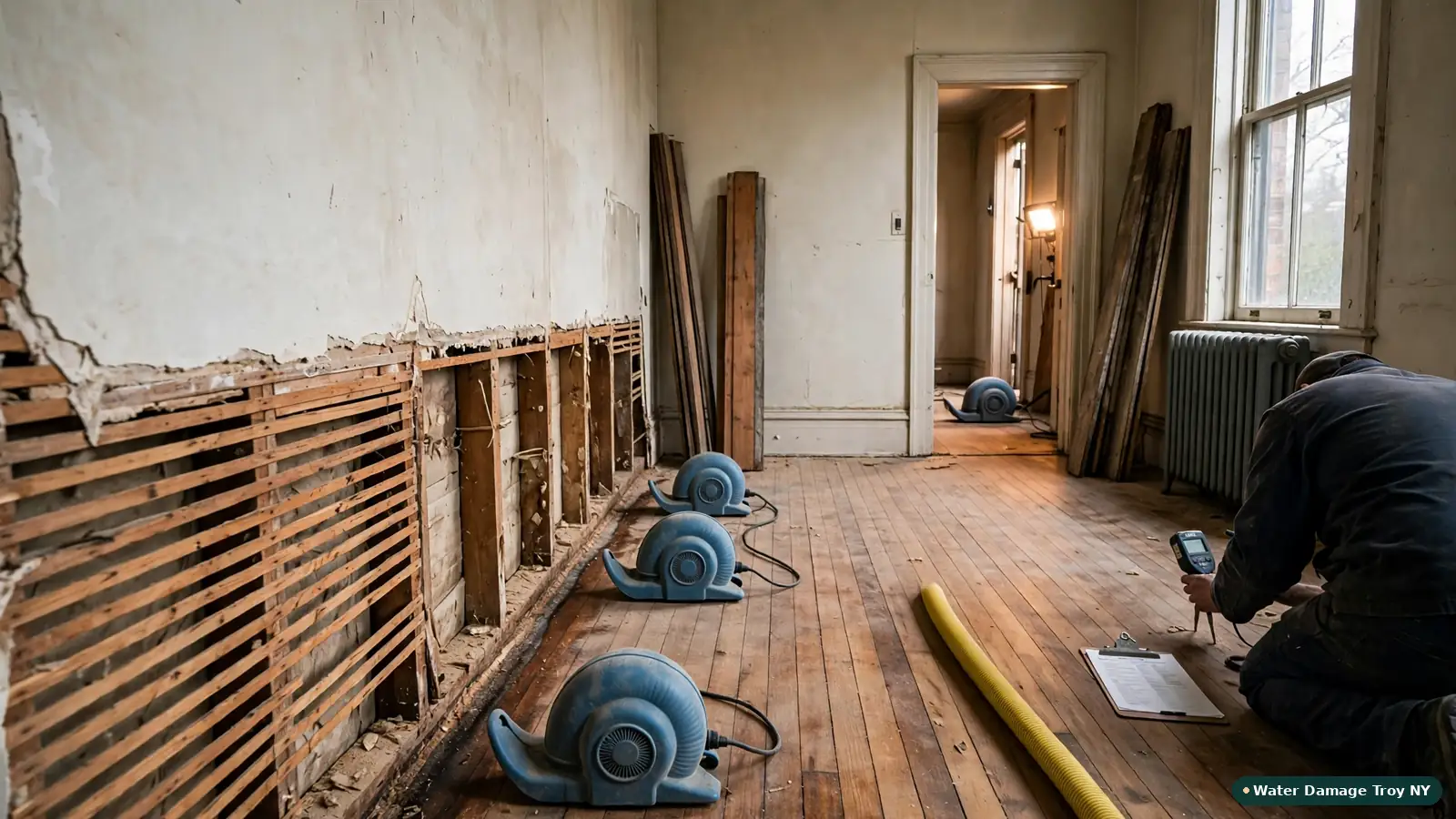
Structural Drying Services in Troy, NY
Structural drying in Troy, NY pulls hidden water out of walls, floors, framing and plaster after a leak or flood. Once the standing water is gone, we map the moisture, set targeted drying equipment and check readings every day until your home is truly dry. water damage restoration in Troy
What Is Structural Drying and Why Do Troy Homes Need It?
Quick answer: structural drying removes water from the building itself, not just the surface. After standing water is gone, moisture stays inside drywall, plaster, framing, subfloors and insulation. Structural drying uses moisture mapping, targeted air movers, dehumidifiers and wall and floor drying systems, with daily readings, until the materials are back to normal dry levels. Skipping it is how small leaks turn into mold and rot.
Our Structural Drying Process in Troy
Stage 1: Map the moisture. Moisture meters and thermal imaging show exactly how far water spread, including inside walls and under floors. leak detection and moisture mapping
Stage 2: Remove only what is ruined. Wet carpet pad, soaked insulation and drywall that cannot be dried come out. Everything else stays.
Stage 3: Set up the drying system. Air movers create airflow across wet surfaces, dehumidifiers pull water out of the air, and wall cavity and floor drying systems reach hidden spaces.
Stage 4: Monitor daily. We take readings at the same marked points every visit and adjust equipment as things dry.
Stage 5: Confirm and document. Drying ends when readings match unaffected areas. You get the moisture log for your records and your insurance claim. water damage insurance claim help
Drying Plaster, Balloon Framing and Stone Foundations in Troy
Troy's older homes were built with materials that dry differently from modern drywall.
- Plaster and lath: plaster holds water longer and can lose its grip on the lath if it stays wet. We dry it slowly and in place whenever possible.
- Balloon framing: wall cavities run from the basement to the attic with no fire blocking, so water travels farther than you expect. We trace it floor by floor.
- Fieldstone and brick foundations: masonry absorbs water and releases it slowly. We dry the air around it and watch for wicking into wood framing.
- Old-growth framing and plank subfloors: dense wood that dries slower but is worth saving.
Our goal is to dry these materials, not tear them out. historic home water damage in Troy
Drying Troy Homes in Winter and Summer
Water damage in Troy happens all year, but winter is when it gets tricky. A burst pipe in January means drying a house while it is 10 degrees outside. Cold air holds very little moisture, so we keep the space warm, close it up and let dehumidifiers do the work. In summer, humid Hudson Valley air means we seal off the drying area so the equipment is not fighting the weather.
We adjust heat, airflow and dehumidification every visit based on what the readings show, so drying keeps moving in every season. burst and frozen pipe cleanup
What Affects Drying Time in a Troy Home
Most homes dry in three to five days, but some Troy jobs take longer. These are the factors that decide it:
- Materials: dense plaster, old-growth framing and thick hardwood dry slower than drywall and plywood
- Foundation: fieldstone and brick hold water and release it slowly
- How long the water sat before drying started
- Temperature: cold January buildings need steady heat for dehumidifiers to work well
- Outdoor humidity: humid Hudson Valley summers mean the space must be closed up
- Hidden pockets: balloon-framed walls and ceiling cavities that need direct airflow
We give you a realistic estimate of drying days on the first visit and update it daily as readings come in, so you always know where things stand. water damage repair and rebuild
More Ways Our Troy Crew Can Help
- Emergency Water Removal
- Flooded Basement Cleanup
- Hidden Leak Detection
- Hardwood Floor Water Damage
- Mold Remediation
- Water Damage Repair & Rebuild
Structural Drying in Troy, NY at a Glance
Short answer: structural drying removes moisture from walls, floors and framing with air movers, dehumidifiers and sometimes heat, until readings match normal, dry material. In Troy's older homes, dense plaster and stone hold moisture longer, so drying is measured, not guessed.
- Equipment: air movers, commercial dehumidifiers, floor drying mats and wall cavity injection.
- Typical time: three to five days for most homes; longer for masonry and thick hardwood.
- Proof: daily moisture readings and a drying log.
- Save first: drying in place can save plaster, trim and hardwood.
- When to open walls: only when readings show water is trapped.
- End point: materials match dry baselines, not a set number of days.
Water Damage Troy NY shares the drying log with you and your insurer. Learn more on our water damage insurance claim help page.
The Drying Equipment We Use in Troy Homes and What Each Machine Does
When our crew sets up in a Troy home, you will see several kinds of machines. Each one has a specific job, and together they speed up drying far beyond what household fans can do.
- Air movers: low, loud fans that blow air across wet surfaces so water evaporates faster.
- Low-grain refrigerant dehumidifiers: pull water out of the air and send it down a drain or hose.
- Desiccant dehumidifiers: work well in cold basements and winter conditions, where standard units slow down.
- Floor drying mats: pull water out of hardwood and subfloors from the top.
- Wall cavity systems: push dry air into walls through small holes.
- HEPA air scrubbers: clean dust and spores from the air during demolition or mold work.
The machines make noise and use power, but they usually run for only a few days. We explain where each one goes and why.
Water Damage Troy NY sizes the equipment to your rooms and materials, so drying is fast without running more machines than you need.
Drying Inside Troy Walls Without Tearing Them Out
Tearing out wet walls is not always needed. In many Troy homes, wall cavities can be dried in place, which saves original plaster, trim and paint and shortens repairs.
- Small holes are drilled behind baseboards or at the bottom of the wall, where they are easy to patch later.
- Dry air is pushed into the cavity through these holes to carry moisture out.
- Baseboards can often be removed, saved and reinstalled.
- Readings inside the wall show whether the method is working.
- If water is contaminated, or insulation inside is soaked, the wall usually has to be opened instead.
This approach works especially well on plaster walls after a clean-water leak, such as a burst supply pipe or an overflowing tub.
Water Damage Troy NY uses in-place drying whenever readings show it will work, which keeps more of your original home intact. historic home water damage in Troy
How We Know a Troy Home Is Truly Dry
A home is not dry just because it feels dry. Plaster, hardwood and masonry can feel fine on the surface while holding water inside. We decide when drying is finished by comparing numbers, not by touch.
- Dry standard: we read unaffected walls and floors in your home to learn what normal looks like for each material.
- Daily readings: wet areas are checked at the same spots each day and logged.
- Air readings: temperature and humidity inside and outside the drying area show how fast water is leaving.
- Equipment moves: if one area stalls, we move or add equipment there.
- Finish line: drying ends when wet materials match the dry standard, not after a set number of days.
This approach protects you from two problems: equipment left running longer than needed, and walls closed up while still wet.
Water Damage Troy NY records every reading, so you can see the progress yourself instead of guessing.
Living in Your Troy Home While Drying Equipment Runs
Most Troy families stay home while drying equipment runs. It takes a little planning, but a few simple habits make those days easier and keep drying on track.
- Keep machines running unless we tell you otherwise; turning them off at night can add days to drying.
- Keep doors and windows closed in drying areas so dehumidifiers are not fighting outdoor air.
- Do not unplug equipment to use the outlet for something else; circuits are planned to avoid tripping breakers.
- Keep children and pets away from cords and air movers.
- Expect the rooms to feel warm and dry; that is a sign the equipment is working.
- Tell us if a breaker trips or a machine stops so we can fix it the same day.
In older homes with limited circuits, we plan where each machine plugs in before we start.
Water Damage Troy NY sets up equipment around your daily life and tells you which machines must stay on and which can be paused.
What Happens When a Troy Home Is Not Fully Dried
Closing walls or laying new floors over materials that are still wet is one of the most common and costly mistakes after water damage. The problems often show up months later.
- Mold grows behind new drywall, paint and flooring.
- New hardwood cups or buckles as moisture moves up from the subfloor.
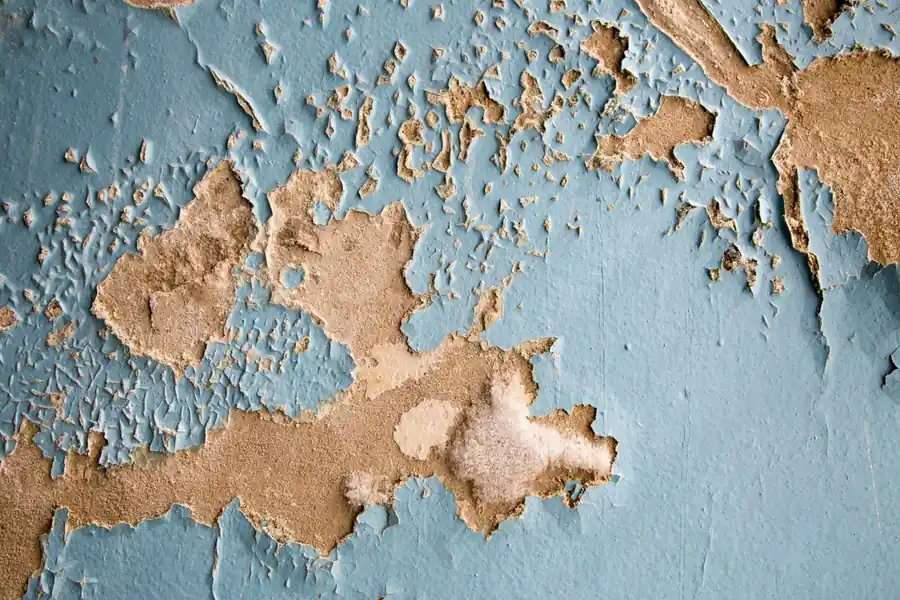
- Paint peels and stains bleed through again.
- Musty odors come back in damp weather.
- Insurers may question later claims if drying was not documented.
Water Damage Troy NY uses these steps on every job, because drying is the part of the work you cannot see but will feel for years.
Structural Drying FAQs - Troy, NY
Structural drying questions we hear most in Troy.
Do drying machines have to run day and night?
Usually, yes. Mold can start growing on wet drywall, wood and insulation within 24 to 48 hours. Leaving equipment running overnight keeps drying on track. We place it to be as quiet and out of the way as possible.
How long does structural drying take?
Most homes take three to five days. Plaster walls, thick fieldstone foundations, hardwood floors and cold winter conditions can push that longer. We decide when drying is done from moisture readings, not from the calendar.
Can I just use fans to dry my house?
Not for anything beyond a small surface spill. Box fans move air across the surface but do not pull water out of the air, so humidity rises and moisture moves into other rooms. Water inside wall cavities, under flooring and in plaster needs targeted airflow and real dehumidification.
Need Walls, Floors or Framing Dried in Troy? Call Now
Water you cannot see is the water that causes mold and rot. Our Troy crew measures, dries and shows you the readings before a single wall is closed back up.
Structural drying in Troy has to work with what is here: plaster on wood lath, old-growth framing, fieldstone foundations and long, cold winters. Water Damage Troy NY sizes the dehumidifiers and air movers to the building, keeps heat steady in January, and logs readings in every room, from Lansingburgh rowhouses to newer homes off Route 7 in Brunswick.
Water Damage Troy NY serves Troy, Lansingburgh, South Troy, Sycaway, the Eastside, Brunswick, North Greenbush and nearby Rensselaer County.